
Juniors
Player Pathway
HRC's player pathway is based on the Long Term Athlete Development (LTAD) model. See how we apply it – from juniors to adult players.
How the pathway works
From little hedgehogs to the adult teams
The player pathway shows how rugby grows with your child. At every stage, training is planned around what the child is ready to learn: first movement and play, then rugby skills and values, and finally competition and team play.
Why do the age groups overlap?
We look at the child’s developmental age, not just their age in years. Everyone matures at their own pace physically, socially, emotionally and cognitively, so each child is placed in the group where they learn and thrive best.
When do children change groups?
A child moves up when they are ready. The decision is made together with the coaches, the parents and the child. Moves happen four times a year – at the start and in the middle of each season – so the groups stay stable.
The parent’s role
Your view of your child’s experience matters to us. Talk to the coaches at training or email juniors@helsinkirugby.org – we want rugby to be an overwhelmingly positive part of your child’s life.


Player Pathway
The pathway step by step
Each stage has its own poster – click the image to open it.
Join at any time – the first month is free.

Stage 1 · ages 3–5
Siilit (Hedgehogs)
Play, movement and a first feel for the ball. Siilit get to know rugby through games and practise being part of a group.
- Moving: running and stopping, jumping, turning and crawling.
- Enjoying: having fun in organised games and having a role in a game.
- Playing: using balls and tags and sharing space with others.
- Following: following instructions and rules given by an adult.
As a parent you can: join in now and then, ask what was fun and cheer – with no pressure to succeed.


Stage 2 · ages 4–7
Lumikot (Stoats)
First rugby skills and playing as a team. Games have a goal, and challenges are faced alone, in pairs and in groups.
- Moving: swerving, rolling and falling, passing, catching and kicking.
- Enjoying: celebrating other players’ efforts and working with a partner.
- Playing: direction in attack and defence, and being part of a team.
- Rules: time as a boundary and scoring points.
As a parent you can: ask the coach if they need your help and encourage the courage to try new things.


Stage 3 · ages 7–9
Ketut (Foxes)
Rugby basics and the sport’s values. Training is full of games that build all-round movement skills and rugby-specific skills.
- ABCs: agility, balance, coordination and speed through games.
- Values: rugby’s five core values – discipline, respect, solidarity, passion and integrity.
- Skills: ball skills and first contact work.
- Challenge: overcoming challenges alone and with team mates.
As a parent you can: encourage several sports and an active lifestyle, practise skills at home and celebrate bravery.


Stage 4 · ages 9–12
Ilvekset (Lynxes)
Athletic skills and first competition. Games start to challenge players physically, and matches and small-sided games are introduced.
- Athletic movement: speed, strength, flexibility, control and endurance through games.
- Athletic lifestyle: warm-up, recovery, nutrition and mental preparation.
- Team: your role in the team and helping others succeed.
- Competition: around 20–30% of the sport is competition-focused.
As a parent you can: avoid comparisons with others, celebrate different strengths and train together at home.


Stage 5 · ages 12–18
Youth
Towards competition and adult rugby. In the youth stage, matches and competition play an ever bigger role, and training becomes more and more like the adult teams’ training.
Kids Development Squad training is open up to the age of 15, and anyone aged 16 or over can also start rugby on the free beginners’ course.

Stage 6 · ages 18+
Adult teams
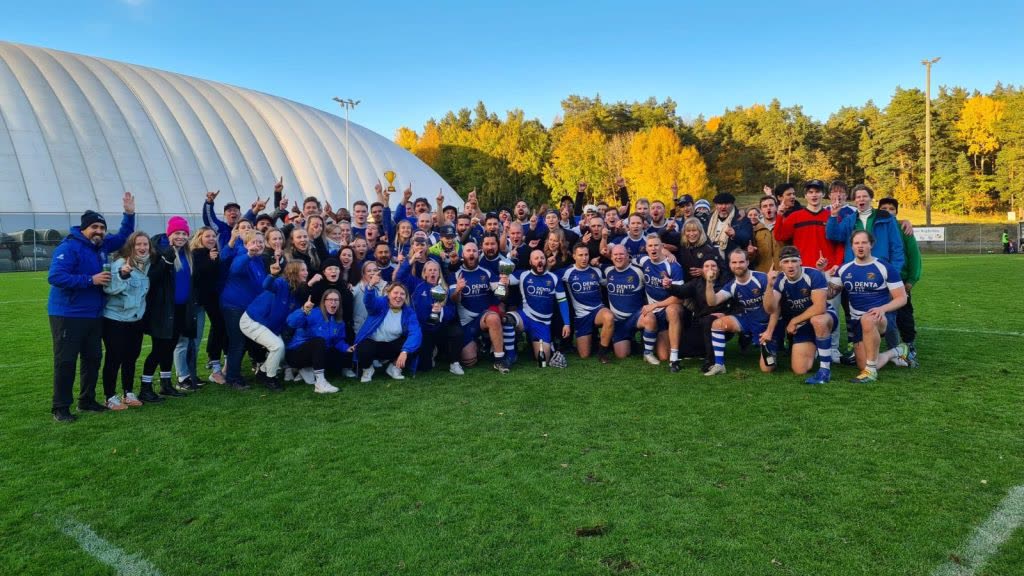
At the end of the path are the club’s adult teams: HRC Women and the Big Guns in the championship league, and the Blue Tigers in the second division. New players are welcome, from beginners to experienced players.
The pathway can also lead to the national team: several HRC women and men currently represent Finland in the national rugby teams. At HRC you can develop from your very first training session all the way to international level.
Welcome to the team!
Next steps